



The starting point
Organizations that want assistants or agents connected to their own information.
AI · COMPANY SERVICES
Prepare sources, permissions and criteria for the AI to respond with corporate knowledge.
For whom
The starting point
Organizations that want assistants or agents connected to their own information.
Dispersed and unaccountable documents produce incomplete or outdated answers.
We define authorized sources, structure, recovery, permits, validity and evaluation.
What we build
Method
Objective, process, people, sources and constraints.
Value, viability, risk and capacity for adoption.
A delimited pilot, evaluated and connected with the real work.
Training, responsible, metrics and continuous improvement.
DUBTE BACK
There is no need to come up with a definite solution. In a free video call we can understand what concerns you, separate noise emergencies and order a possible first step.
Human Gates
We define what sources the system can use, what decisions it must scale, and what actions require human approval. We measure quality, exceptions and utility before expanding autonomy.
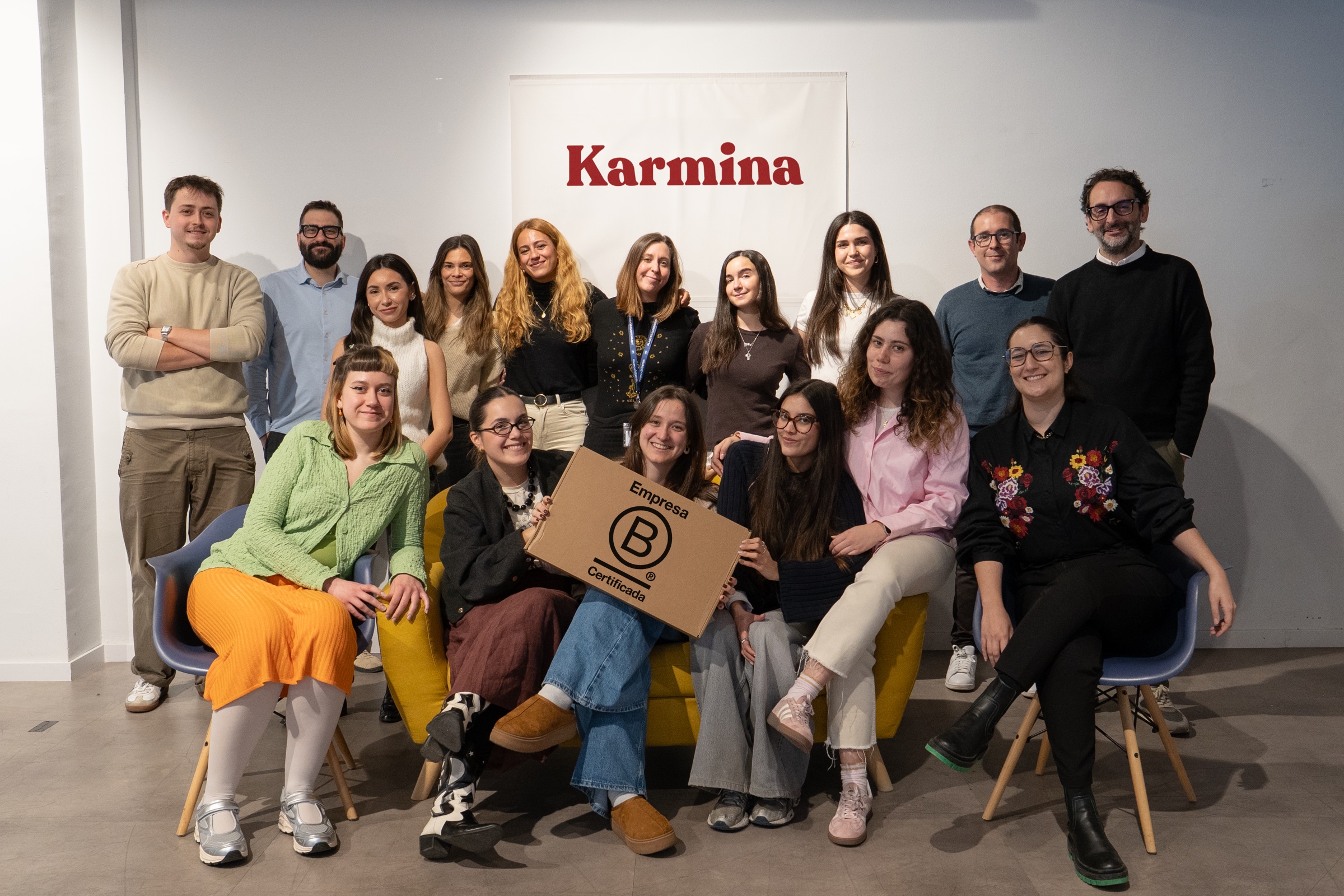
Karmina, the agency behind the Studio
Behind Karmina AI Studio there is an agency with track record, team, scale and applied experience in real organizations.
Karmina · AI Studio · Criterio · Dunder Mifflin · Utopiq · Smart Team
 +€119mIn advertising investment for clients
Ads Platforms
Partners MetaGoogle Ads
 TikTok
 Pinterest
 Barcelona
 B CorpCertified company
A CONCRETE QUESTION ALSO SERVES
Tell us about your question, the process you want to review or the idea you cannot quite put into words yet. A member of our team will read it.
Let’s talk
Tell us the context, even if the challenge is not yet fully defined. One person in the team will respond to understand and value the first step.
hello@karmina.aiFAQS · STRATEGY AND KNOWLEDGE
It is the governed basis of knowledge, criteria and responsibilities that prepares an organization to work with AI. It includes source map, authority, versions, permissions, vocabulary, examples, boundaries, owners, and proofs; it is not just a repository or a vector base.
A search tool retrieves documents. The Foundation explains which documents are valid, for which question, who can see them and what happens when they disagree. It adds governance to content, not just access technology.
Procedures, policies, brand guides, examples, glossaries, internal FAQs, catalogs and operational records when necessary. Each source needs useful metadata: owner, validity, scope and level of access.
The most common mistakes are ingesting everything, ignoring versions, mixing public and restricted documents, or relying on file names. Another flaw is not preparing test questions before building.
It needs accountability, review dates, expiration alerts, change log and a way to report errors. If the canonical source changes, the Foundation must reflect it without opaque manual reconstructions.