KarminaAI StudioAgents · Services · Training





Performance & Intelligence · AGENT-A08
Benchmark Scout
This landing page explains what automates Benchmark Scout, what sources and tools you need, how the result is reviewed and how it can be applied within a company.
StrategyOwn knowledgeProportional permissionsHuman supervisionMeasurement and improvement
01
The agent, at a glance
What Accelerates
Periodic collection, capture of evidence, classification, comparison between periods and preparation of a summary of relevant movements.
What does it deliver
Comparative matrix, figures for actor, evidence, changes, observed practices, data not available, hypotheses and questions for the team.
For whom it is
Strategy, marketing, communication, product, digital experience, sales or innovation teams that need to follow an environment in a consistent way.
What it doesn't do
It does not access private data, does not score what it cannot observe, does not present a sample as the whole and does not recommend copying a practice without understanding the context.
02
The problem it solves
When each benchmark uses different criteria, the changes between periods mean nothing
Comparisons are often prepared under pressure. They change the actors, the dimensions, the dates and even the way of counting. The result can be visually convincing and, at the same time, impossible to update or defend.
The Benchmark Scout reduces frictions like:
- Search for the same profiles and pages again.
- Compare grouped formats with unique pieces.
- Infer segmentation or scope from the visible format.
- Convert the absence of a data into a zero.
- Mix observations, opinions and recommendations.
- Lose the original evidence.
- Change the sample when a data does not fit.
03
What exactly is Benchmark Scout?
It is a comparative research agent with a defined sample, methodology and frequency. It may follow competitors, referents, campaigns, websites, services, content, shopping experiences or other observable objects.
Each dimension needs a rule: what is counted, what unit it represents, how a grouped content is treated, what is considered change and when it is written “not available”.
04
What do you do, specifically?
01. Keep the sample
It retains actors, sources, URLs and inclusion justification, and records any changes.
02. Apply a stable methodology
Use the same dimensions, definitions, and periods to make observations comparable.
03. Gather evidence
Save link, date, capture or necessary data within the authorized limits.
04. Classify without inferring more than you see
Separate format, theme, product, person, country, message, functionality or other agreed dimensions.
05. Detect changes
It points to appearances, withdrawals, new practices, frequency changes or significant differences between periods.
06. Prepare a comparative reading
It shows patterns and exceptions, but leaves the recommendation linked to the context of the organization.
07. Keep an Appendix of Limits
Document coverage, access, dates, missing data and methodological decisions.
DUBTE BACK
You don’t have to know which agent you need.
Let’s start with a repeated task, the sources available and the result you want to review. In a free video call we can assess if you need an agent, a service or simply better order the process.
Video call · free · no obligationBook a free video call ↗A short conversation to understand your starting point and bring clarity.
05
How it works from start to finish
- Load shows, period and dimensions.
- Confirm that the sources are still available.
- Collect evidence and mark absences.
- Classify with the agreed rules.
- compared to the previous period.
- Generate tables, examples and prioritized changes.
- One person reviews cases ambiguously.
- The version with date, sample and methodology is published.
06
Example of situation
Ten visible ads don’t necessarily equate to ten creatives
In an advertising review, a platform displays several ads grouped under the same content. The Benchmark Scout retains the count of observed ads, but also identifies groups and unique creatives when the source allows.
The report does not use the two levels as if they were interchangeable. Nor does it deduct the exact location for the 9:16 ratio. The methodology makes these boundaries visible before comparing brands.
07
What do we need before we launch it?
Essential
- Question and use of the benchmark.
- Sample and inclusion criteria.
- Dimensions and Definitions.
- Permitted sources and expected coverage.
- Frequency and periods.
- Format of evidence and conservation.
- Someone who solves ambiguities.
Highly recommended
- Benchmark above or examples.
- Taxonomy of formats and topics.
- Quality and “uncomparable” criteria.
- Context of the organization to interpret the differences.
08
How we implant it
- We define the question and the minimum useful sample.
- We build methodology and classification manual.
- Let's make a first joint collection.
- We review ambiguities and double counting.
- We validate tables, evidences and limits.
- We form the team to review exceptions.
- We automate the recurring update by maintaining change control.
A REAL TASK IS THE BEST BRIEF
Explain where the friction is concentrated.
You can send us an example, the approximate volume and how it is reviewed today. No need to share sensitive data to make a first assessment.
09
Human supervision and boundaries
The agent can
- Collect public or authorized data.
- Sort by a taxonomy.
- Detect differences and recurrences.
- Prepare tables and evidence.
- Mark missing or noncomparable data.
Agent can't
- Skip access restrictions.
- Infer private business data.
- Change the sample to favor a conclusion.
- Automatically score complex strategic decisions.
- Present partial observation as an exhaustive audit.
Stop and scale when
The source blocks access, the object has changed, the classification is ambiguous, the data may contain personal information, evidence is missing or the methodology does not cover a new case.
10
Sources and possible connections
Websites, advertising libraries, social profiles, apps, platforms, public documents and authorized repositories. It can feed Market Scout, Brand Guard, Social Listener, Lead Scout or a commercial strategy.
11
How do we measure if it adds value?
- Preparation time for each wave.
- Percentage of observations with evidence.
- Consistency between classifiers and periods.
- “Unavailable” data treated correctly.
- Really useful changes detected.
- Decisions or tests that the benchmark helps formulate.
- Reduction of duplicate work in subsequent searches.
12
For whom does it make sense?
It can fit if
- The benchmark is repeated monthly or quarterly.
- There are a lot of players with the same dimensions.
- The current comparatives lose methodology.
- Evidence is needed to justify the reading.
- The organization wants to learn without copying.
It’s not the first step yet.
- There is no question or justifiable sample.
- The necessary information is not legally observable.
- A simple ranking is sought to validate an opinion.
- The comparison will not trigger any decisions or learning.
DUBTE BACK
You don’t have to know which agent you need.
Let’s start with a repeated task, the sources available and the result you want to review. In a free video call we can assess if you need an agent, a service or simply better order the process.
Video call · free · no obligationBook a free video call ↗A short conversation to understand your starting point and bring clarity.
13
Knowledge Foundation and adoption
The basis includes sample, criteria, taxonomy, sources, periods, evidence, exclusions and previous benchmarks. The organization also needs to document what it considers relevant and what it should not copy even if it works for another actor.
The onboarding focuses on ambiguous cases, limits of inference, methodological discipline and strategic reading of differences.
14
Frequently Asked Questions
Can you analyze competitors automatically?
It can automate much collection and classification, but available sources and interpretation set clear limits.
How do you choose competitors?
The sample is defined with the team: direct competitors, referents, alternatives or aspirational cases may have different functions.
Can you guess who does it best?
Only if there are measurable dimensions and a defensible scale. It is often more useful to show differences and evidence than a single note.
Can you compare data from Ads Library?
Yes, within the information that the library makes visible. It is necessary to distinguish grouped ads, unique creativity and transparency limits.
What if a source is no longer available?
The change is recorded, the data is marked as unavailable and an alternative source is valued without dissimulating the methodological break.
How much does it cost and how long does it take?
It depends on the sample, dimensions, sources and frequency. The first wave defines the methodology and usually requires more revision than updates.
15
Closure and conversion
What comparison do you build again each time the market moves?
Tell us what you want to compare, why and how often. We will prepare a stable methodology, reviewable evidence and a process that can be maintained.
Direct contact hello@karmina.ai
Karmina, the agency behind the Studio
Why Karmina?
Behind Karmina AI Studio there is an agency with track record, team, scale and applied experience in real organizations.
Karmina · AI Studio · Criterio · Dunder Mifflin · Utopiq · Smart Team
 +€119mIn advertising investment for clients
Ads Platforms
Partners MetaGoogle Ads
 TikTok
 Pinterest
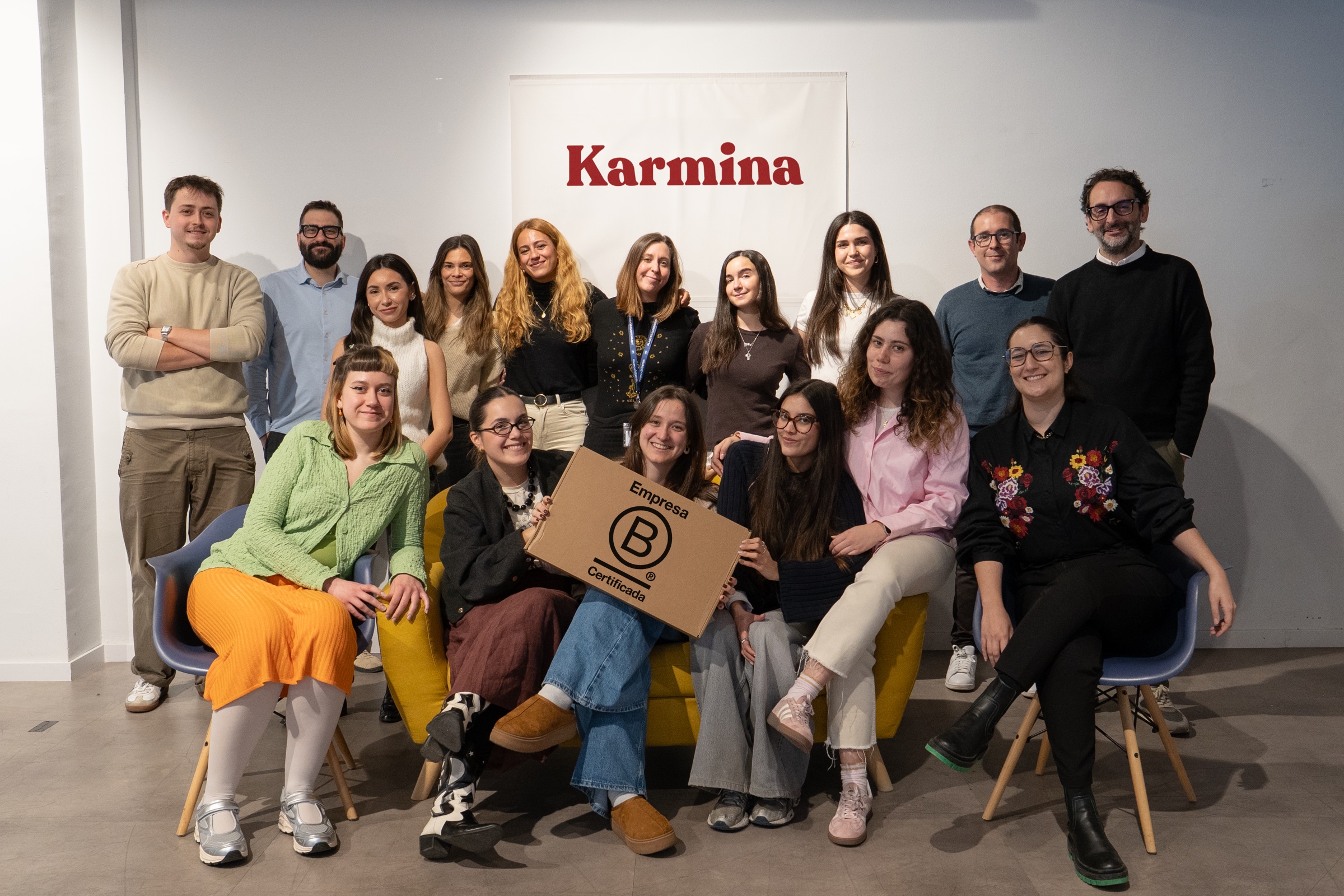 Barcelona
Madrid
Buenos AiresOur offices · Meet the team ↗
+50 KCommunity
 B CorpCertified company
The team
People who connect knowledge and practice


Arnau Sanz
Agentic Strategy & AI Transformation Lead

Ignasi Llorente
AI Partnerships & Business Director

Martina Díaz
AI Finance & Business Intelligence Director

Daniel Mallén
AI Operations & Workflow Lead

Eva Trigo
Generative Creative Director

Ariadna Miranda
AI Administration & Knowledge Operations Lead

Claudia Gonzalez
AI Client Success Manager

Jonan Basterra
AI Social Strategy Director

Laura Sabio
Agentic Social Media Lead

Agustina Córdoba
Content AI Specialist

Alba Gómez
Social Listening Specialist

Paola Cudeiro
AI Client Success Specialist

Roger López
AI Project & Workflow Specialist

Mar Berzal
AI Content Strategy Lead

Andrea Gallego
Community Intelligence Specialist

Candela de la Fuente
Content AI Specialist

Blanca Gómez
AI Community Operations Specialist

Cintia Armajach
Content AI SpecialistLet’s talk
Let's talk about Benchmark Scout
Tell us about your situation, even if the challenge is not fully defined. A member of our team will respond to understand the process and discuss a first step.
hello@karmina.ai