KarminaAI StudioAgents · Services · Training




Performance & Intelligence · AGENT-A07
Market Scout
This landing page explains what automates Market Scout, what sources and tools you need, how the result is reviewed and how it can be applied within a company.
StrategyOwn knowledgeProportional permissionsHuman supervisionMeasurement and improvement
01
The agent, at a glance
What Accelerates
The definition of the search map, source location, data extraction, synthesis, contrast, and recurrent radar update.
What does it deliver
Executive response, evidence map, source sheets, date and scope data, hypotheses, gaps, pending questions and possible next steps.
For whom it is
Strategy, marketing, innovation, sales, product, communication and management teams that need to prepare a decision with more context.
What it doesn't do
It does not replace primary studies when they are needed, does not invent market data, does not take an opaque estimate for granted, and does not recommend an opportunity just because it appears on multiple pages.
02
The problem it solves
Searching is easy. Knowing if an answer is strong enough to act is another job.
Digital research can produce hundreds of results in minutes. But sources quote each other, use different periods, hide methodologies, or confuse prediction with reality.
Without a system:
- The question changes as results appear.
- The figures are replicated without finding the origin.
- Articles that do not change any decision are accumulated.
- Incompatible estimates are presented together.
- The date, the market and the sample disappear from the summary.
- The findings anticipate more than the evidence allows.
- The search is repeated because no one retains the trace.
The Market Scout orders the route from the question to the degree of confidence of the answer.
03
What exactly is Market Scout?
It is an agent that executes research protocols defined by question type. It can explore public sources, authoritative databases, internal documentation, studies, media, records, and accessible social signals.
His output is not just a narrative. Each important statement must be able to relate to a source, a date, a methodology or a note that explains why it is an inference.
04
What do you do, specifically?
01. Translate the need into research questions
Limit market, public, period, geography, decision and stop criteria.
02. Design the source map
Prioritize primary and official sources, identify contrast sources and document what is left out.
03. Gather evidence
Extract data, statements, definitions and cases maintaining the link, date and context.
04. Evaluate quality and comparability
Checks authorship, methodology, shows, actuality, source interest and consistency with other evidence.
05. Separate layers of certainty
It classifies confirmed fact, estimation, opinion, inference, rumor and information vacuum.
06. Prepare a decision-oriented synthesis
Answer what we know, what we don’t know, what would change the decision and what validation step makes sense.
07. Update Recurrent Radars
You can refer back to the same question and point out only what has really changed.
DUBTE BACK
You don’t have to know which agent you need.
Let’s start with a repeated task, the sources available and the result you want to review. In a free video call we can assess if you need an agent, a service or simply better order the process.
Video call · free · no obligationBook a free video call ↗A short conversation to understand your starting point and bring clarity.
05
How it works from start to finish
- You get the question and the associated decision.
- Confirms scope, term and quality criteria.
- Provide a map of sources.
- Collect and record evidence.
- Contrast, eliminate duplicates and point out contradictions.
- Write a synthesis with degree of confidence.
- An expert reviews the reading and decides the next step.
- Research is available to update or reuse.
06
Example of situation
Three market estimates do not form a more reliable data
The team wants to value a new service in a region. The Market Scout finds three very different market size figures. Instead of doing an average, it retrieves each study’s market definition, period, methodology, and geography.
He discovers that one figure includes adjacent services and that another is a global projection. The synthesis explains that no value exactly answers the initial question and proposes a bottom-up method with local sources. The useful conclusion is the gap that needs to be resolved, not an apparently accurate figure.
07
What do we need before we launch it?
Essential
- A decision or question you need to report.
- Geographical, temporal and sectorial range.
- Type of source allowed and preferred.
- Quality and depth threshold.
- Output format and review person.
- Treatment of payment or confidential sources.
Highly recommended
- Explicit initial assumptions.
- Vocabulary and Market Definitions.
- Sources known to the team.
- Criteria for differentiating signal and opportunity.
- History of previous research.
08
How we implant it
- We select two or three types of recurring question.
- We define protocols, sources and levels of evidence.
- We build sheet templates and synthesis.
- Let's do a pilot with a real search.
- We review omissions, biases, appointments and utility.
- We train the team to ask questions and validate answers.
- We connect the system with radars, benchmarks or proposals.
A REAL TASK IS THE BEST BRIEF
Explain where the friction is concentrated.
You can send us an example, the approximate volume and how it is reviewed today. No need to share sensitive data to make a first assessment.
09
Human supervision and boundaries
The agent can
- Search and synthesize allowed sources.
- Comparing definitions and methodologies.
- Keep appointments and date of consultation.
- Identify contradictions and gaps.
- Propose hypotheses or following checks.
Agent can't
- Invent an absent figure.
- Access unlicensed databases.
- Present an estimate as fact.
- Give by representative a limited sample.
- Make a marketing decision on behalf of the organization.
Stop and scale when
There are no sufficient sources, the definitions are incompatible, the data may be confidential, the use requires expert advice or research may affect people or groups in a sensitive way.
10
Sources and possible connections
Official websites, registers, studies, licensed databases, media, internal repositories and sectoral sources. You can connect with Benchmark Scout, Social Listener, Lead Scout, Proposal Builder and Blog Publisher.
11
How do we measure if it adds value?
- Time to a useful first answer.
- Percentage of statements with sufficient trace.
- Primary sources recovered.
- Contradictions and gaps identified before deciding.
- Reused or updated searches.
- Decisions that the team can make or rule out more clearly.
- Necessary corrections after expert review.
12
For whom does it make sense?
It can fit if
- There are repeated questions of market or public.
- Research is time-consuming and poorly documented.
- A sectoral radar needs to be updated.
- The team wants to separate better evidence and recommendation.
- Business propositions need reliable context.
It’s not the first step yet.
- The question is not linked to any decision.
- A survey, interview or primary experiment is needed.
- There is no one capable of interpreting the search.
- A confirmation of an already decided conclusion is sought.
DUBTE BACK
You don’t have to know which agent you need.
Let’s start with a repeated task, the sources available and the result you want to review. In a free video call we can assess if you need an agent, a service or simply better order the process.
Video call · free · no obligationBook a free video call ↗A short conversation to understand your starting point and bring clarity.
13
Knowledge Foundation and adoption
The basis includes markets, definitions, publics, preferred sources, hypotheses, questions, evidence criteria, and prior research. This memory prevents the agent from starting again each time and allows comparing updates.
onboarding teaches you to ask delimited questions, review appointments, detect confirmation biases, and communicate uncertainty without making it a useless answer.
14
Frequently Asked Questions
Do you do full market studies?
It can speed up a lot of secondary research. If primary data, sampling or statistical validation is required, a specific project must be designed.
Can you use payment sources?
Yes, if the organization is properly licensed and automated use is allowed.
How to avoid inventing data?
It does not fill gaps with plausible values. Keep the source and mark explicitly what could not be confirmed.
Can you update a radar every week?
Yeah. The frequency depends on the speed of the market and whether the news can trigger a real decision.
Is it the same as Benchmark Scout?
No. Market Scout answers larger questions about market and public; Benchmark Scout maintains a stable comparison between actors or defined experiences.
How much does it cost and how long does it take?
It depends on depth, sources, markets and frequency. The first pilot is bounded on a question sufficiently important and verifiable.
15
Closure and conversion
What decision needs a better documented answer?
Explain to us the question, the deadline and what would change depending on the outcome. We will design a research that shows both the evidence and its limits.
Direct contact hello@karmina.ai
Karmina, the agency behind the Studio
Why Karmina?
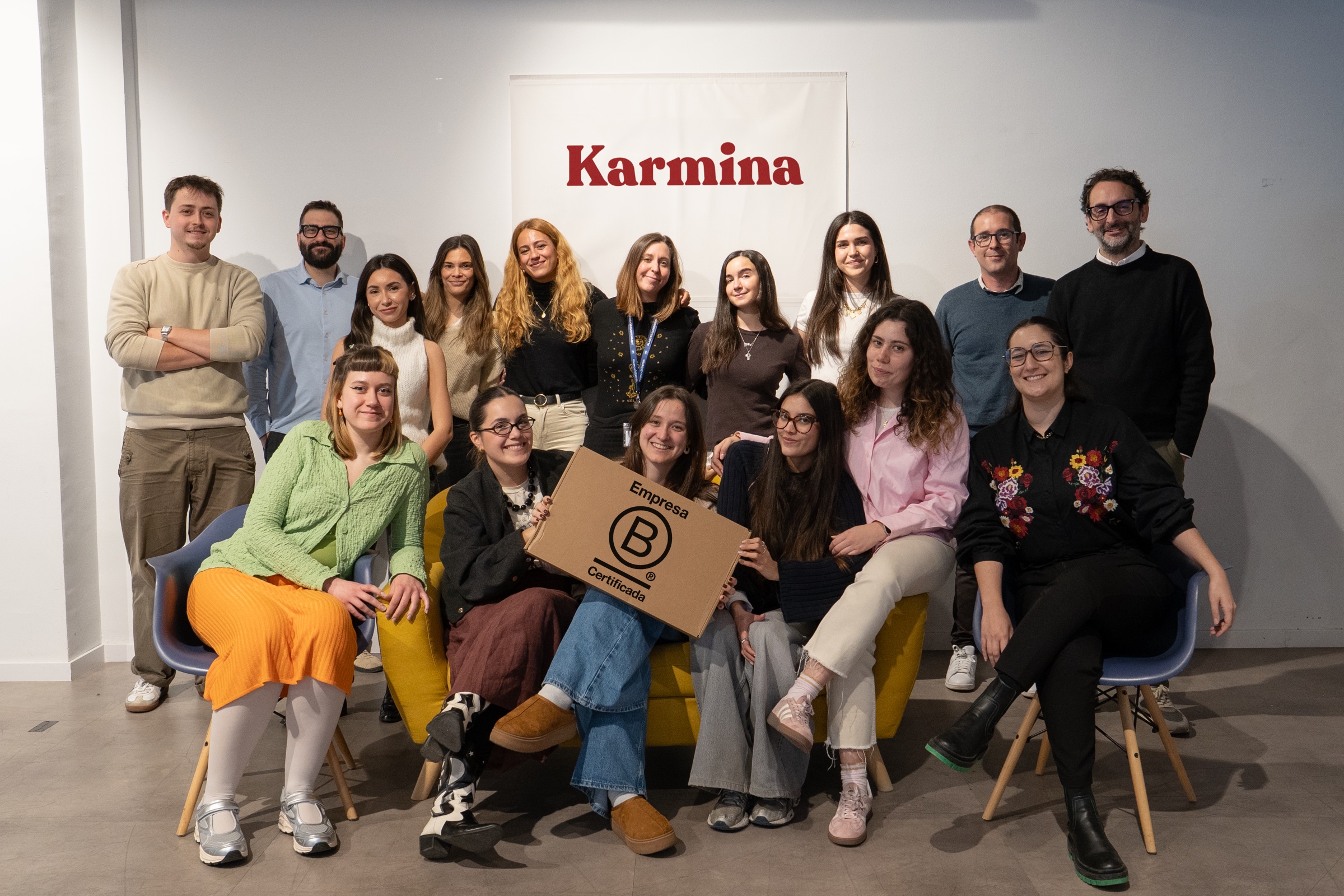
Behind Karmina AI Studio there is an agency with track record, team, scale and applied experience in real organizations.
Karmina · AI Studio · Criterio · Dunder Mifflin · Utopiq · Smart Team
 +€119mIn advertising investment for clients
Ads Platforms
Partners MetaGoogle Ads
 TikTok
 Pinterest
 Barcelona
Madrid
Buenos AiresOur offices · Meet the team ↗
+50 KCommunity
 B CorpCertified company
The team
People who connect knowledge and practice


Arnau Sanz
Agentic Strategy & AI Transformation Lead

Ignasi Llorente
AI Partnerships & Business Director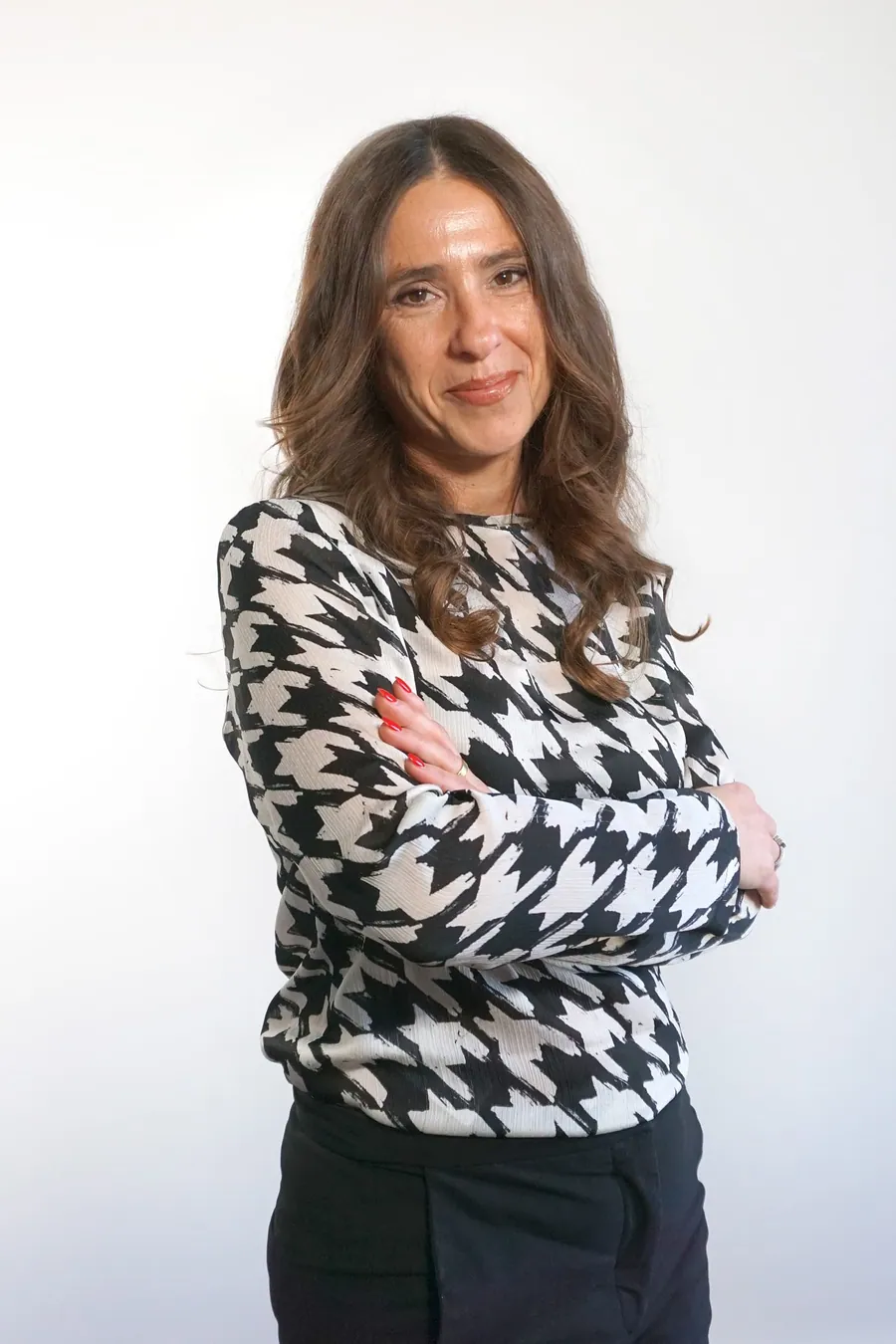

Martina Díaz
AI Finance & Business Intelligence Director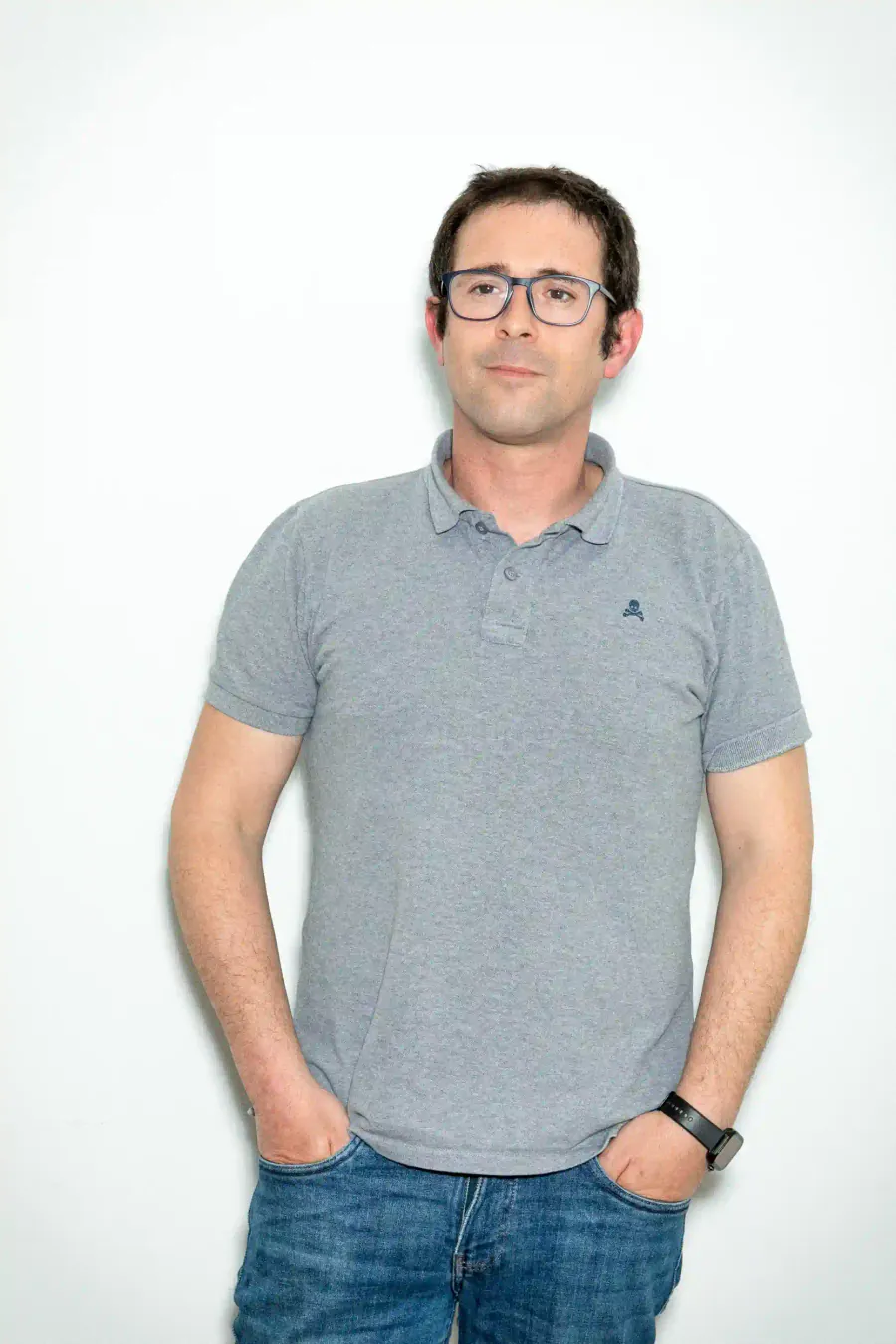

Daniel Mallén
AI Operations & Workflow Lead

Eva Trigo
Generative Creative Director

Ariadna Miranda
AI Administration & Knowledge Operations Lead

Claudia Gonzalez
AI Client Success Manager

Jonan Basterra
AI Social Strategy Director

Laura Sabio
Agentic Social Media Lead

Agustina Córdoba
Content AI Specialist

Alba Gómez
Social Listening Specialist

Paola Cudeiro
AI Client Success Specialist

Roger López
AI Project & Workflow Specialist

Mar Berzal
AI Content Strategy Lead

Andrea Gallego
Community Intelligence Specialist

Candela de la Fuente
Content AI Specialist

Blanca Gómez
AI Community Operations Specialist

Cintia Armajach
Content AI SpecialistLet’s talk
Let's talk about Market Scout
Tell us about your situation, even if the challenge is not fully defined. A member of our team will respond to understand the process and discuss a first step.
hello@karmina.ai