KarminaAI StudioAgents · Services · Training





Performance & Intelligence · AGENT-A05
Social Listener
This landing page explains what automates Social Listener, what sources and tools you need, how the result is reviewed and how it can be applied within a company.
StrategyOwn knowledgeProportional permissionsHuman supervisionMeasurement and improvement
01
The agent, at a glance
What Accelerates
The monitoring of queries, the classification of mentions, the detection of recurring issues, the preparation of alerts and the transformation of signals into editorial or operational opportunities.
What does it deliver
Signal files with source, date, context, category, level of verification, relevance, risk, possible application and person or destination circuit.
For whom it is
Social media, communication, reputation, attention, content, product and research teams that need to listen with shared criteria.
What it doesn't do
It does not access unauthorized spaces, does not infer sensitive attributes of people, does not convert a partial sample into general opinion and does not respond to reputational situations without protocol.
02
The problem it solves
Between a notification and an opportunity there is context, verification, and discretion.
Brands receive mentions, comments, doubts, complaints, community content, competitor moves and trends. The problem is not just finding them. It is to understand what they represent and who must act.
Without a shared system:
- Important alerts are lost between routine notifications.
- The same topic is classified differently according to the person.
- A viral post is confused with a sustainable trend.
- A rumor arrives on the calendar before being verified.
- Personal data or community content is reused without review of rights.
- Social, attention, communication and product do not share the learning.
- The radar becomes a news list with no application.
The Social Listener creates a funnel between detection and decision.
03
What exactly is Social Listener?
It is a monitoring and classification agent that works with queries, sources, categories and defined protocols. You can observe accessible public conversations, data from your own channels and selected sources, always within the conditions of each platform and the agreed purpose.
You don't need to hold on to everything you find. You need to keep only the necessary information, with a clear provenance and a time frame consistent with use.
04
What do you do, specifically?
01. Follow queries and priority sources
Brand, products, competitors, themes, creators, incidents or questions, with explicit and reviewable coverage.
02. Classify the signal
Separate query, complaint, risk, opportunity, community content, trend, rumor, benchmark, product insight or noise.
03. Apply a level of verification
Difference primary source, confirmed information, inference, opinion and unverified content.
04. Value relevance and urgency
Compare the signal with audiences, territories, channels, momentum, volume, speed and risk to avoid alerts without context.
05. Drift to the right circuit
You can send an inquiry to Inbox FlowA chance at the Social Publisher, an incidence of communication or a tendency to Market Scout.
06. Build an editorial radar
It filters many news to few applicable opportunities, with source, justification, and suggested decision.
07. Keep memory of patterns
Gather recursions without losing the original cases and help the team detect questions or frictions sustained.
DUBTE BACK
You don’t have to know which agent you need.
Let’s start with a repeated task, the sources available and the result you want to review. In a free video call we can assess if you need an agent, a service or simply better order the process.
Video call · free · no obligationBook a free video call ↗A short conversation to understand your starting point and bring clarity.
05
How it works from start to finish
- Execute queries and agreed sources.
- Remove duplicates and content out of reach.
- Record provenance, date and level of verification.
- Classify according to the taxonomy of the account.
- It applies relevance, urgency, risk and possible use.
- Scale alerts immediately and prepare for recurring radar.
- A person validates high-impact decisions.
- The system records what was applied, observed or discarded.
06
Example of situation
A growing subject does not automatically enter the calendar.
The Social Listener detects an increase in conversations about a new industry practice. Posts come from few profiles and there is still no primary source to confirm the scope of the change.
Instead of recommending an immediate publication, classify the signal as a Prep: retains the examples, requests a check on Market Scout and proposes to draft a piece only if sufficient evidence appears. The team avoids amplifying a rumor and keeps the opportunity under observation.
07
What do we need before we launch it?
Essential
- The radar has to respond.
- Sources, channels and queries allowed.
- Signal Taxonomy.
- Criteria of relevance, verification and risk.
- Response and escalation protocols.
- Responsible people by category.
- Data policy, conservation, attribution and rights.
Highly recommended
- Social Media OS and publishing territories.
- Crisis history, questions and opportunities.
- List of primary or authorized sources.
- Specific criteria for community content and minors.
- Calendar of campaigns and sensitive moments.
08
How we implant it
- We define questions and decisions, not just keywords.
- We audit access, coverage and limits of each source.
- We build taxonomy, verification and chain scaling.
- Let's make a pilot in observation mode.
- We review false positives, biases and absent sources.
- We connect signals with real circuits of content, attention or reputation.
- We build the equipment and update the radar according to use.
A REAL TASK IS THE BEST BRIEF
Explain where the friction is concentrated.
You can send us an example, the approximate volume and how it is reviewed today. No need to share sensitive data to make a first assessment.
09
Human supervision and boundaries
The agent can
- Collect allowed information.
- Classify and group signals.
- Apply levels of verification.
- Prepare alerts and radars.
- Derive a finding in the agreed circuit.
Agent can't
- Access data or spaces without authorization.
- Infer gender, health, ideology, or other sensitive attributes.
- Give real identity to a pseudonymous person.
- Contact or reuse content because there is a mention.
- Present a rumor or a limited sample as a general fact.
Stop and scale when
There is a possible reputational risk, sensitive data appears, minors participate, the source cannot be verified, it is considered to reuse UGC or the situation may require a public response.
10
Sources and possible connections
Own channels, social listening tools, allowed public searches, sectoral sources, media and internal repositories. You can connect with Social Publisher, Inbox Flow, Support Desk, Market Scout and Karmina Review Agent.
11
How do we measure if it adds value?
- Time between appearance and detection of a relevant signal.
- Percentage of useful alerts.
- Reduction of duplicates and noise.
- Opportunities applied, tested, prepared or observed.
- Correctly scaled incidents.
- Recurring questions turned into content or service improvements.
- Regarding rights, purpose and conservation periods.
12
For whom does it make sense?
It can fit if
- The team receives many signals but manages them in a dispersed manner.
- You want to build a recurrent editorial or reputational radar.
- Social, attention and product need to share learning.
- It is important to differentiate trend, rumor and opportunity.
- It works with community or UGC and needs a circuit of rights.
It’s not the first step yet.
- It has not been decided what the organization wants to hear.
- There are no accountability or escalation protocols.
- It is intended to obtain full coverage that sources do not allow.
- The main problem is answering an input tray, not listening to the environment.
DUBTE BACK
You don’t have to know which agent you need.
Let’s start with a repeated task, the sources available and the result you want to review. In a free video call we can assess if you need an agent, a service or simply better order the process.
Video call · free · no obligationBook a free video call ↗A short conversation to understand your starting point and bring clarity.
13
Knowledge Foundation and adoption
The database includes brand, products, public, risks, territories, queries, sources, taxonomy, protocols and reference cases. Knowledge is not used to label people, but to interpret signals in the context of the organization.
The onboarding works especially on verification, biases, content rights and criteria for not reacting to everything the agent detects.
14
Frequently Asked Questions
Can you listen to any network?
No. Coverage depends on the conditions, access and available data of each platform. The landing page and the project must explain this frontier.
Do you do sentiment analysis?
It may classify tones or intentions with proven criteria, but it is not presented as an infallible reading of human emotion. Cases with impact are reviewed.
Can you detect a crisis?
It can detect defined signals and accelerations, but the qualification and response of a crisis correspond to the protocol and the people responsible.
Can you reuse community posts?
Only after checking authorship, rights, consent, purpose and conditions of use. A label or mention is not an unlimited license.
Is it the same as Inbox Flow?
No. Social Listener observes and interprets the environment; Inbox Flow manages direct inputs and drifts them.
How much does it cost and how long does it take?
It depends on the sources, coverage, frequency and circuits. The pilot begins with concrete questions and really accessible sources.
15
Closure and conversion
What important sign would you like to stop discovering late?
Explain to us what you need to observe, what sources you use, and what should happen when an opportunity or risk arises. We will build a narrow, verifiable and connected radar with the equipment.
Direct contact hello@karmina.ai
Karmina, the agency behind the Studio
Why Karmina?
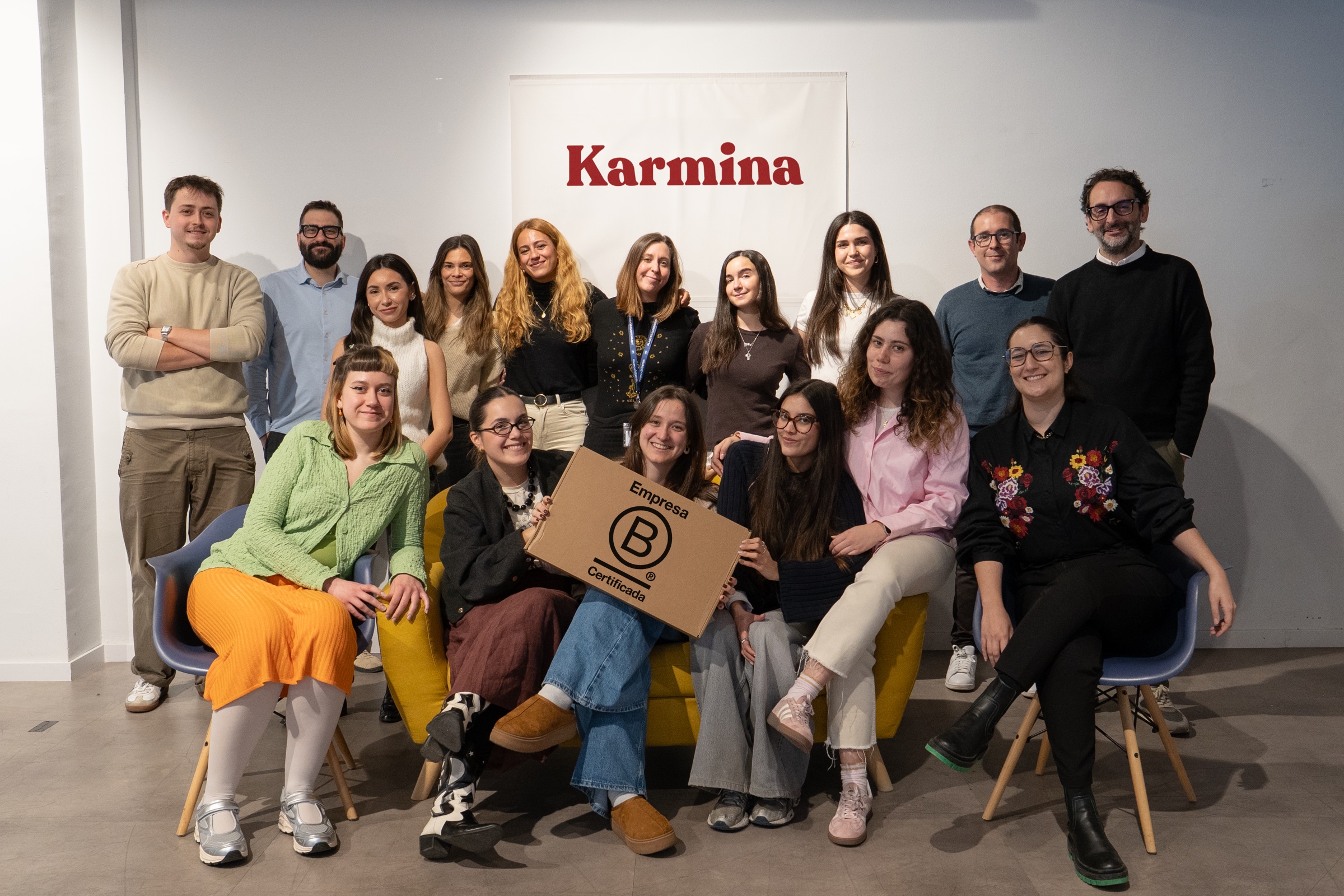
Behind Karmina AI Studio there is an agency with track record, team, scale and applied experience in real organizations.
Karmina · AI Studio · Criterio · Dunder Mifflin · Utopiq · Smart Team
 +€119mIn advertising investment for clients
Ads Platforms
Partners MetaGoogle Ads
 TikTok
 Pinterest
 Barcelona
Madrid
Buenos AiresOur offices · Meet the team ↗
+50 KCommunity
 B CorpCertified company
The team
People who connect knowledge and practice


Arnau Sanz
Agentic Strategy & AI Transformation Lead

Ignasi Llorente
AI Partnerships & Business Director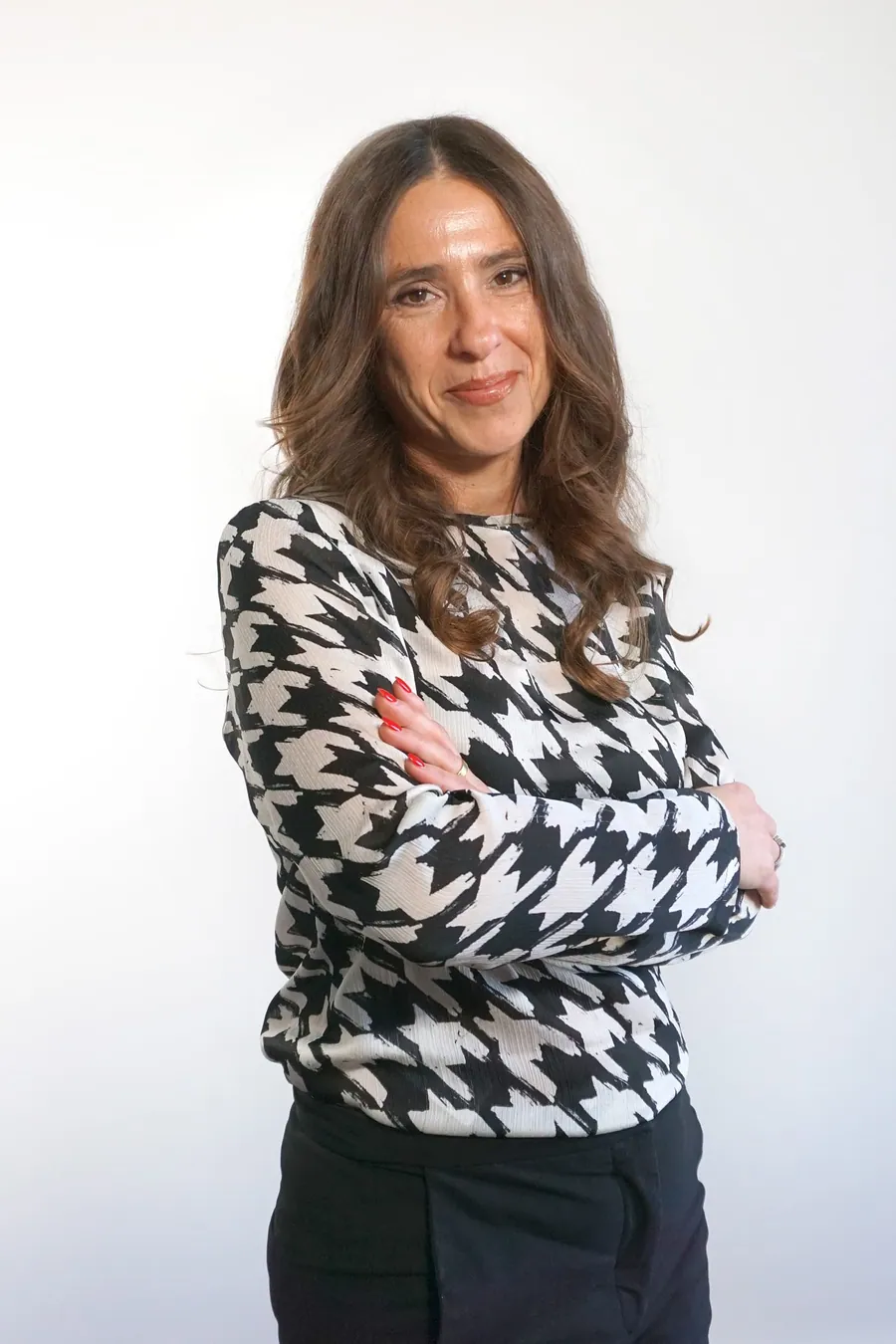

Martina Díaz
AI Finance & Business Intelligence Director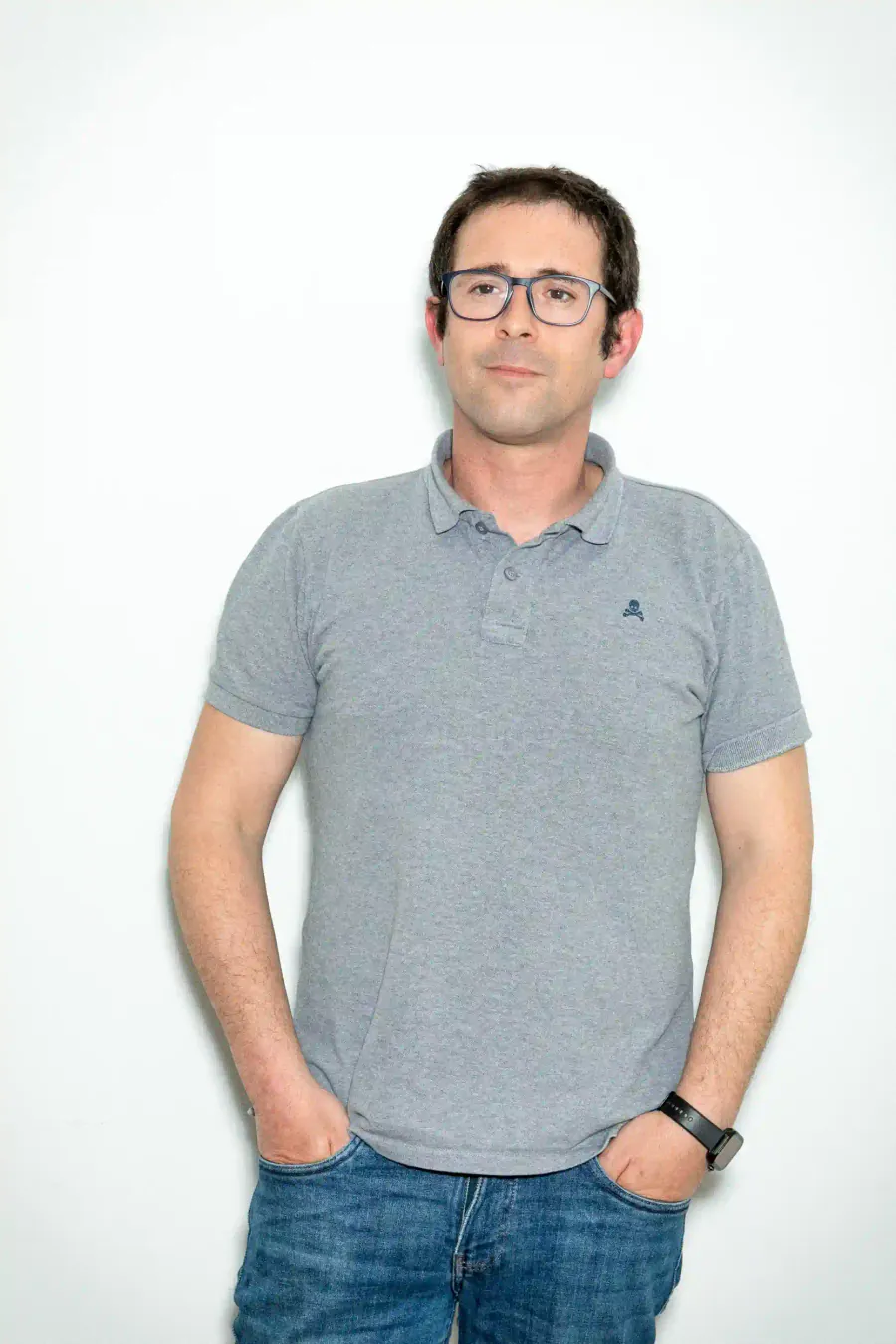
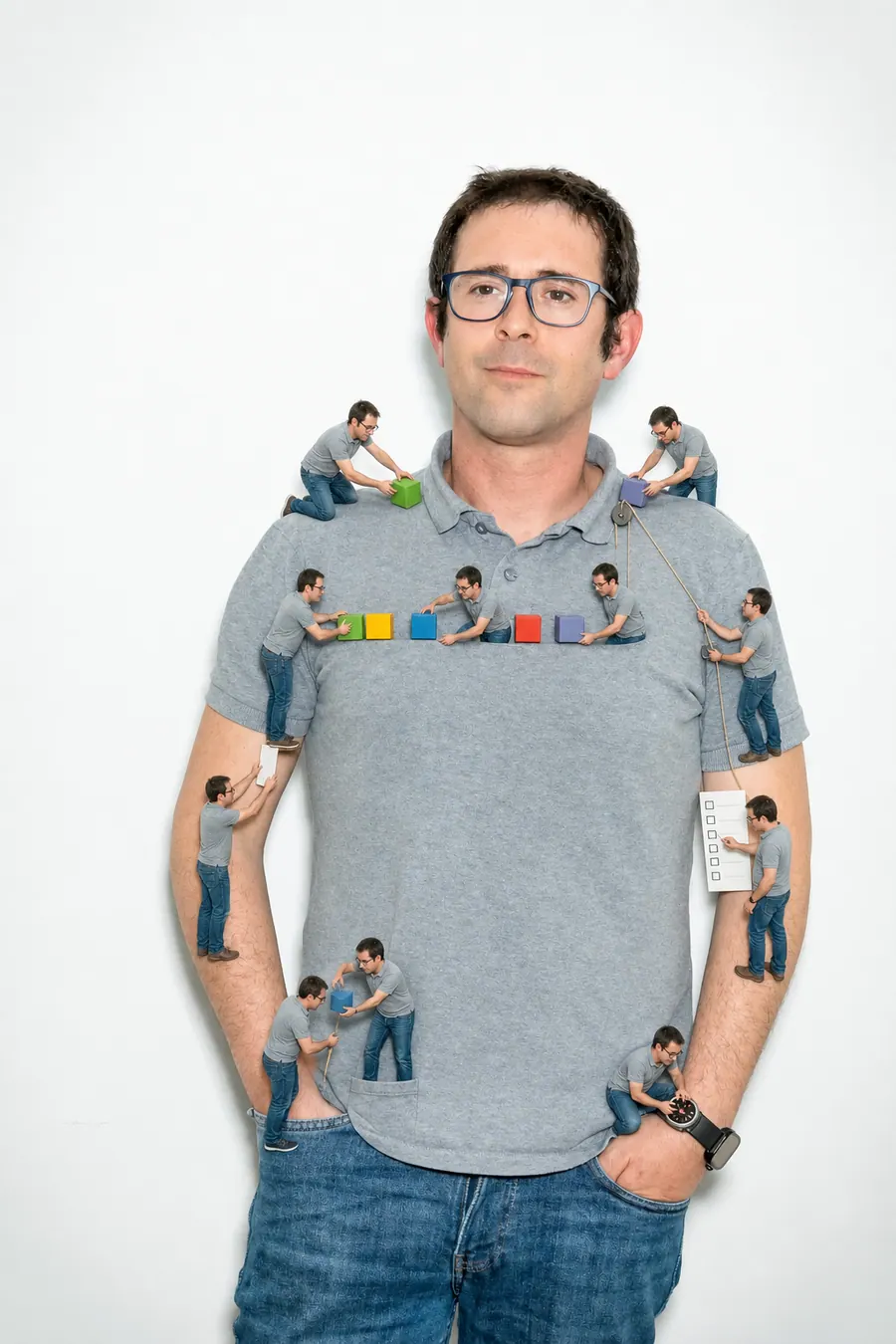
Daniel Mallén
AI Operations & Workflow Lead

Eva Trigo
Generative Creative Director

Ariadna Miranda
AI Administration & Knowledge Operations Lead

Claudia Gonzalez
AI Client Success Manager

Jonan Basterra
AI Social Strategy Director

Laura Sabio
Agentic Social Media Lead

Agustina Córdoba
Content AI Specialist

Alba Gómez
Social Listening Specialist

Paola Cudeiro
AI Client Success Specialist

Roger López
AI Project & Workflow Specialist

Mar Berzal
AI Content Strategy Lead

Andrea Gallego
Community Intelligence Specialist

Candela de la Fuente
Content AI Specialist

Blanca Gómez
AI Community Operations Specialist
Cintia Armajach
Content AI SpecialistLet’s talk
Let's talk about Social Listener
Tell us about your situation, even if the challenge is not fully defined. A member of our team will respond to understand the process and discuss a first step.
hello@karmina.ai