KarminaAI StudioAgents · Services · Training





Performance & Intelligence · AGENT-A04
SEO Monitor
This landing page explains what automates SEO Monitor, what sources and tools you need, how the result is reviewed and how it can be applied within a company.
StrategyOwn knowledgeProportional permissionsHuman supervisionMeasurement and improvement
01
The agent, at a glance
What Accelerates
Recurrent technical checking, task tracking, regression detection, editorial inventory, query monitoring and priority preparation.
What does it deliver
Explained alerts, reproducible incidents, evidence, URLs affected, suggested priority, responsible, next action and verification status.
For whom it is
SEO teams, marketing, content, product and development that need to coordinate actions on a living web.
What it doesn't do
It does not guarantee positions, does not confuse correlation with cause, does not execute code changes without a circuit, and does not recommend creating content just because a keyword exists.
02
The problem it solves
A SEO recommendation only adds value when implemented, checked and maintained
Many SEO plans accumulate audits, spreadsheets, and tasks that lose context. A fix can be left half implemented, a template can reintroduce an error or a migration can change indexing, canonicals and linking without anyone detecting it in time.
Monitoring is difficult because it combines:
- Technical status of the website.
- Editorial decision and validity of the content.
- Search data with latency and noise.
- CMS changes, development or architecture.
- Business priorities that evolve.
- New questions that appear in search engines and generative systems.
The SEO Monitor binds these signals into a reviewable circuit.
03
What do you do, specifically?
01. Check your indexing health
It detects excluded URLs, errors, coverage changes, unexpected canonicals, redirects and other signals defined as priorities.
02. Verify implementations
Compare an agreed task with the rendered state or available data and check whether it is complete, partial, absent or unverifiable.
03. Monitor templates and regressions
Runs recurring samples on page types to identify when a common change affects many URLs.
04. Maintain the editorial inventory
It points out obsolete, duplicate, unlinked, unaccountable or misaligned contents with the current architecture.
05. Order performance changes
It relates variations with period, query, URL, device, market and implementation history. He does not give an explanation if there is not enough evidence.
06. Prepare the backlog
It groups incidents, eliminates duplicates and proposes priority according to impact, scope, risk, effort and dependencies.
07. Connect SEO, AEO and GEO
It can monitor questions, entities, sources, structured data, consist of profiles and content that are part of a broader visibility strategy.
04
How it works from start to finish
- Execute the check schedule.
- Confirm that the sources and properties are correct.
- Collect data and samples from the web.
- Compare the state with expected rules and implementations.
- Group findings by probable cause and scope.
- Prepare reproducible evidence and suggested priority.
- The SEO team or technician validates the conclusion and assigns the action.
- The agent rechecks after the change and closes or reopens the incident.
DUBTE BACK
You don’t have to know which agent you need.
Let’s start with a repeated task, the sources available and the result you want to review. In a free video call we can assess if you need an agent, a service or simply better order the process.
Video call · free · no obligationBook a free video call ↗A short conversation to understand your starting point and bring clarity.
05
Example of situation
An apparently published improvement does not yet exist for the user or for the searcher
A task in the roadmap is listed as completed: new titles and descriptions have been added to a template. The SEO Monitor checks a rendered sample and detects that the CMS saves the fields, but the template continues to display the old values.
The incidence is sent with example URLs, difference between source and rendered and estimated scope. After correction, the agent rechecks the sample and records the verification. Do not give for an implementation so that a box is checked.
06
What do we need before we launch it?
Essential
- Properties, directories and markets included.
- Access to necessary data and environments.
- Roadmap and priority criteria.
- Minimum inventory of page types.
- Definition of the expected status of each check.
- Managers SEO, editorials and technicians.
- Circuit to assign, verify and close incidents.
Highly recommended
- History of migrations and changes.
- Map of words, questions and entities.
- Internal link architecture.
- Registration of contents and owners.
- Test environment or pre-production.
07
How we implant it
- Diagnosis of properties, sources and processes.
- Selection of checks that actually trigger a decision.
- Definition of samples, frequencies and severity.
- Pilot in a directory or set of templates.
- Calibration of duplicates, false positives and latency.
- Integration with the backlog and onboarding of those responsible.
- Progressive extension to more properties or layers of visibility.
08
Human supervision and boundaries
The agent can
- Collect data and check statuses.
- Detect regressions and inconsistencies.
- Prepare incidents with evidence.
- Propose priority and responsibility.
- Check the result after a change.
Agent can't
- Guarantee causality or positioning.
- Modify templates, redirects or indexing without authorization.
- Delete or consolidate content based on traffic only.
- Treating every fall as a penalty.
- Convert generic recommendations into tasks without context.
Stop and scale when
A change affects many URLs, there is risk of deindexation, properties do not match, data is incomplete, an unregistered migration appears or repair can alter navigation, analytics or business.
A REAL TASK IS THE BEST BRIEF
Explain where the friction is concentrated.
You can send us an example, the approximate volume and how it is reviewed today. No need to share sensitive data to make a first assessment.
09
Sources and possible connections
Search Console, analytics, trackers, CMSs, repositories, task managers, content maps and performance sources. You can connect with Blog Publisher, Site Builder, Dashboard Builder and Brand Guard.
10
How do we measure if it adds value?
- Time of detection of regressions.
- Percentage of tasks verified after being implemented.
- Reduction of duplicate incidents or without evidence.
- Time between detection, assignment and resolution.
- Coverage of priority templates and directories.
- Quality of the backlog and clarity of those responsible.
- Content updated, consolidated or withdrawn with criteria.
11
For whom does it make sense?
It can fit if
- There is a SEO road map that is hard to keep alive.
- The website changes often or has many templates.
- SEO, content and development work in separate tools.
- Incidents are detected when performance has already changed.
- You need to coordinate SEO with GEO, AEO and digital reputation.
It’s not the first step yet.
- There is no SEO strategy or priority.
- Properties and accesses are not under control.
- The website needs an initial audit before defining what needs to be monitored.
- No one can execute or validate the corrections.
12
Knowledge Foundation and adoption
The base includes architecture, objectives, properties, metrics, conventions, contents, entities, managers, history and priority criteria. The monitor needs to know what is important to that organization, not just what is technically detectable.
onboarding teaches how to reproduce incidents, interpret severity, document changes, and not make content decisions based on a single metric.
DUBTE BACK
You don’t have to know which agent you need.
Let’s start with a repeated task, the sources available and the result you want to review. In a free video call we can assess if you need an agent, a service or simply better order the process.
Video call · free · no obligationBook a free video call ↗A short conversation to understand your starting point and bring clarity.
13
Frequently Asked Questions
Replaces an audit SEO?
No. An audit defines problems and priorities; the monitor keeps track and checks that the improvements continue.
Can you fix the errors automatically?
Only very delimited, reversible and proven actions. Most technical or editorial changes go through a responsible person.
Is it just Google?
Not necessarily. It can incorporate other sources and a broader visibility strategy, as long as it defines what can be observed and with what reliability.
Can you control multiple websites or languages?
Yeah. Each property needs its own configuration, managers, market and criteria.
As a priority?
With an agreed matrix of impact, scope, risk, effort, dependencies and business importance. The final priority remains in the hands of the team.
How much does it cost and how long does it take?
It depends on the number of properties, checks, sources and integrations. The pilot usually starts in a representative enough area to calibrate the system.
14
Closure and conversion
Which SEO recommendation do you still not know if it is actually implemented?
Share your roadmap, priority properties and current circuit between SEO, contents and development. We will propose a first monitor that produces useful evidence, no more noise.
Direct contact hello@karmina.ai
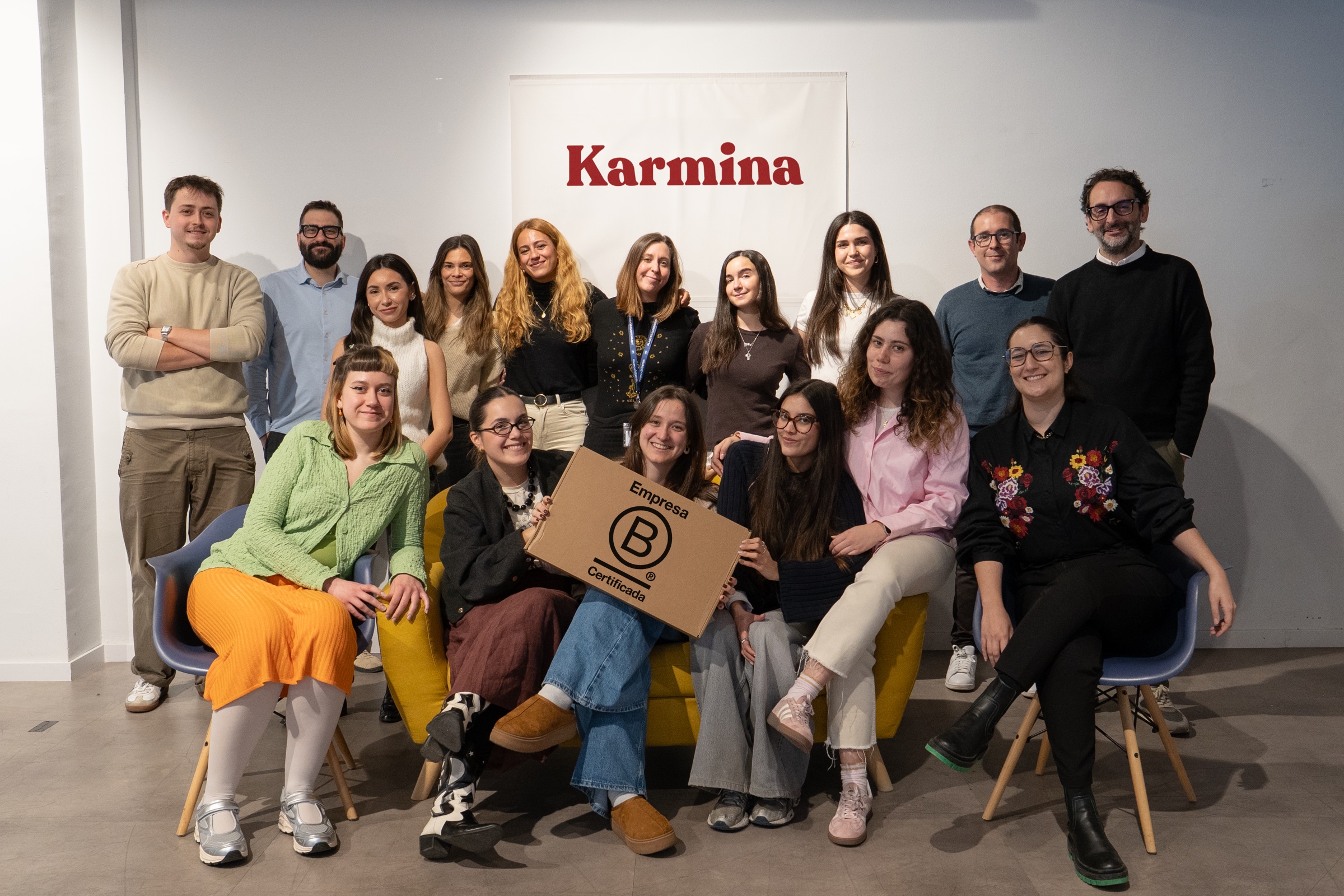
Karmina, the agency behind the Studio
Why Karmina?
Behind Karmina AI Studio there is an agency with track record, team, scale and applied experience in real organizations.
Karmina · AI Studio · Criterio · Dunder Mifflin · Utopiq · Smart Team
 +€119mIn advertising investment for clients
Ads Platforms
Partners MetaGoogle Ads
 TikTok
 Pinterest
 Barcelona
Madrid
Buenos AiresOur offices · Meet the team ↗
+50 KCommunity
 B CorpCertified company
The team
People who connect knowledge and practice


Arnau Sanz
Agentic Strategy & AI Transformation Lead

Ignasi Llorente
AI Partnerships & Business Director

Martina Díaz
AI Finance & Business Intelligence Director

Daniel Mallén
AI Operations & Workflow Lead

Eva Trigo
Generative Creative Director

Ariadna Miranda
AI Administration & Knowledge Operations Lead

Claudia Gonzalez
AI Client Success Manager

Jonan Basterra
AI Social Strategy Director

Laura Sabio
Agentic Social Media Lead

Agustina Córdoba
Content AI Specialist

Alba Gómez
Social Listening Specialist

Paola Cudeiro
AI Client Success Specialist

Roger López
AI Project & Workflow Specialist

Mar Berzal
AI Content Strategy Lead

Andrea Gallego
Community Intelligence Specialist

Candela de la Fuente
Content AI Specialist

Blanca Gómez
AI Community Operations Specialist

Cintia Armajach
Content AI SpecialistLet’s talk
Let's talk about SEO Monitor
Tell us about your situation, even if the challenge is not fully defined. A member of our team will respond to understand the process and discuss a first step.
hello@karmina.ai